VR Escape Room Game Powered by GS-Verse 3DGS Engine

Table of Contents

VR Escape Room Game Powered by GS-Verse 3DGS Engine

An exciting new project has emerged in the space of real-time 3D rendering and interactive VR gaming: Escape Room (GS-Verse). Built on top of the GS-Verse Gaussian Splatting engine, this VR escape room demonstrates the potential of incorporating 3D Gaussian Splatting (3DGS) representations inside interactive gaming setups.

Project Overview

The game is built using Unity 2022.3.47f1 along with OpenXR and the XR Interaction Toolkit, targeting immersive virtual reality headsets. It challenges players to solve interactive puzzles (such as a Fibonacci sequence puzzle, a keypad safe puzzle, and bookshelf navigation) in a fully reconstructed, photorealistic environment powered by 3D Gaussian Splatting shaders.

Engine and Technical Details

The Gaussian Splatting rendering pipeline is integrated as a Unity Package Manager (UPM) dependency pointing to a specialized fork of GS-Verse pinned to the escape-room-v1 tag.

Because the project relies on high-performance Gaussian Splatting shaders compiled via DXC, the Unity engine targets D3D with DXC from a Windows editor environment. CI/CD builds are automated using a self-hosted Windows runner executing headless Unity builds and packaging them into a single-file installer via Inno Setup 6.

For more details, check out the GS-escape-room GitHub repository.
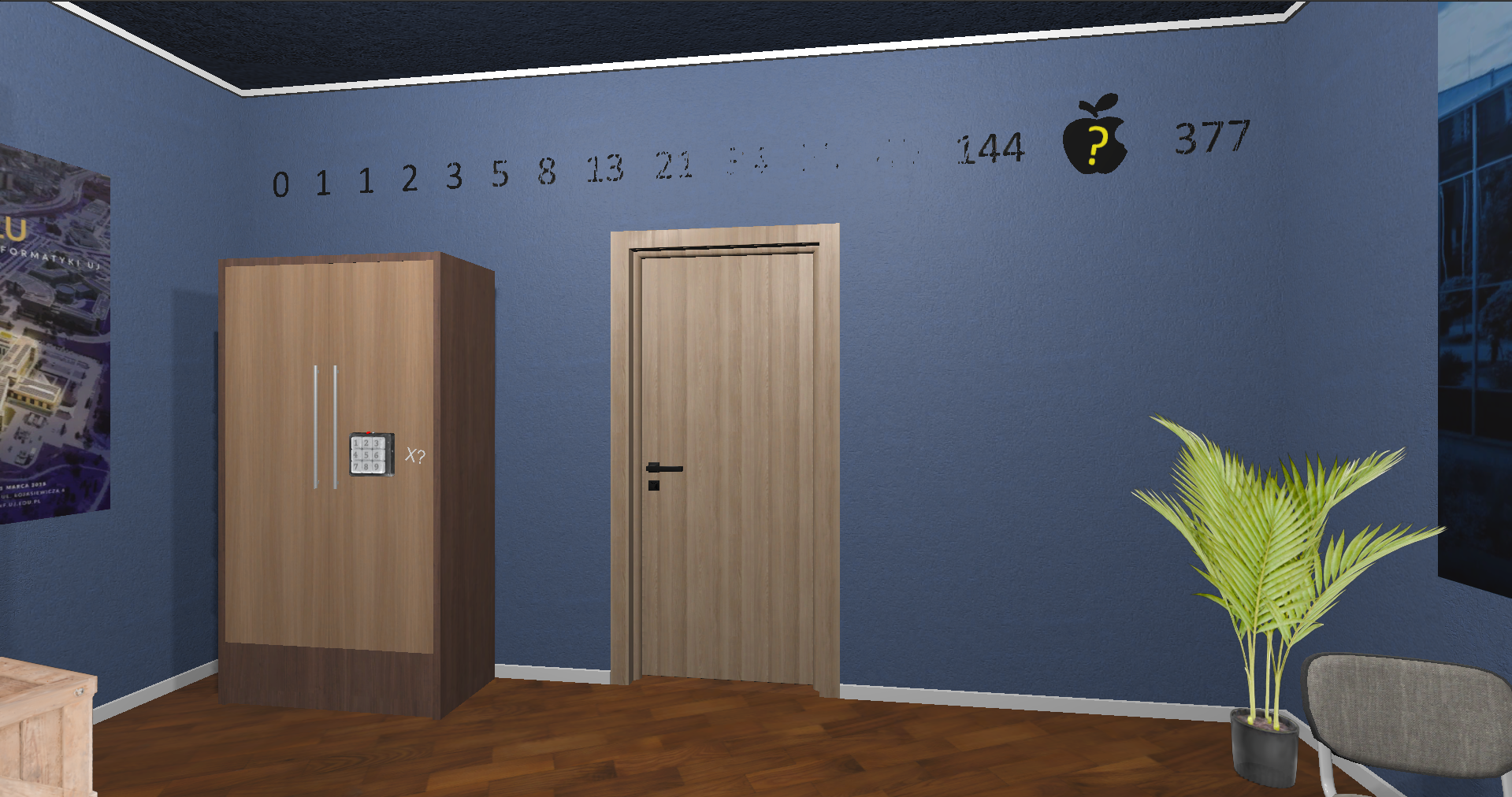
Escape room with the Fibonacci puzzle and palm
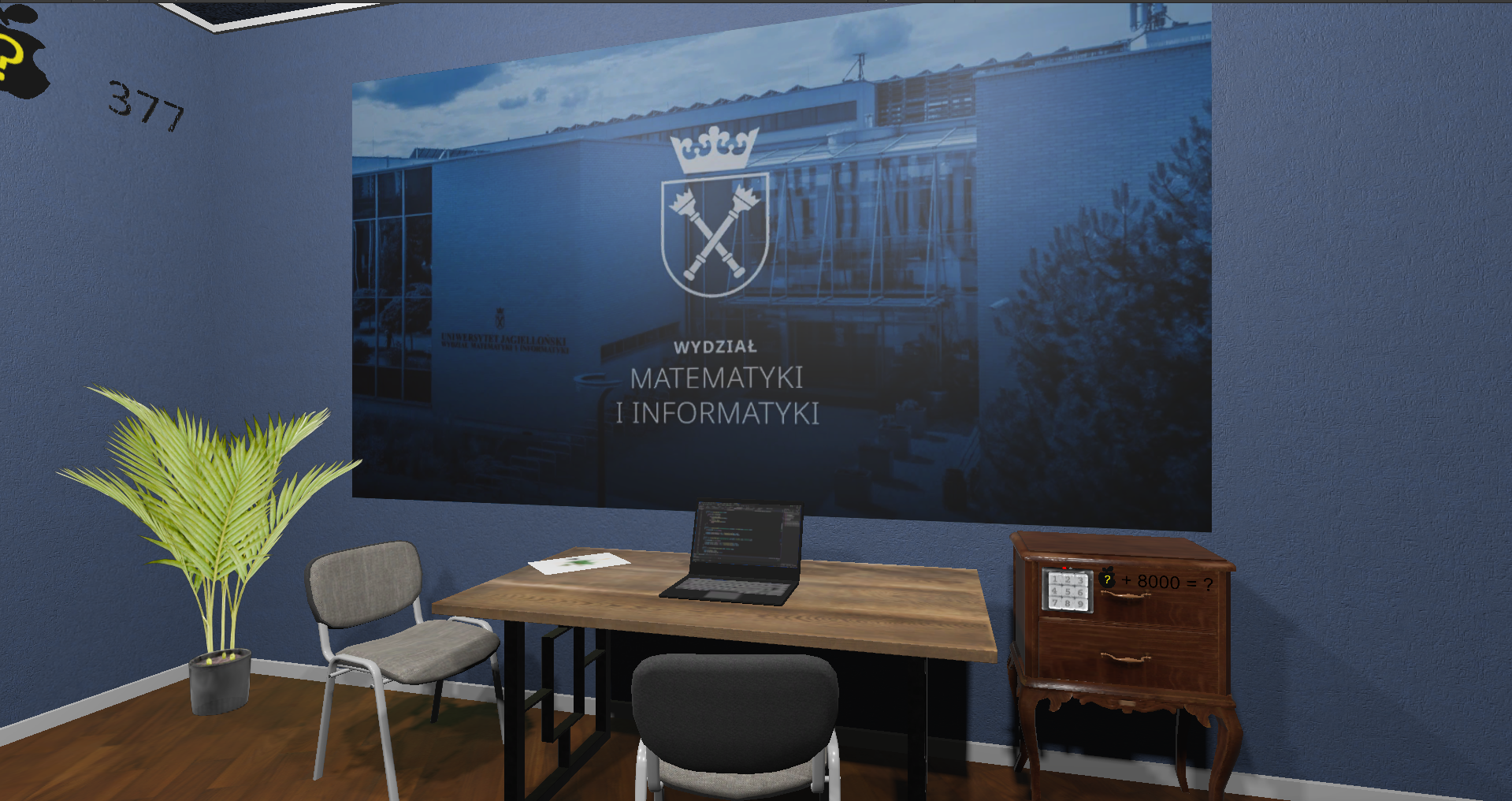
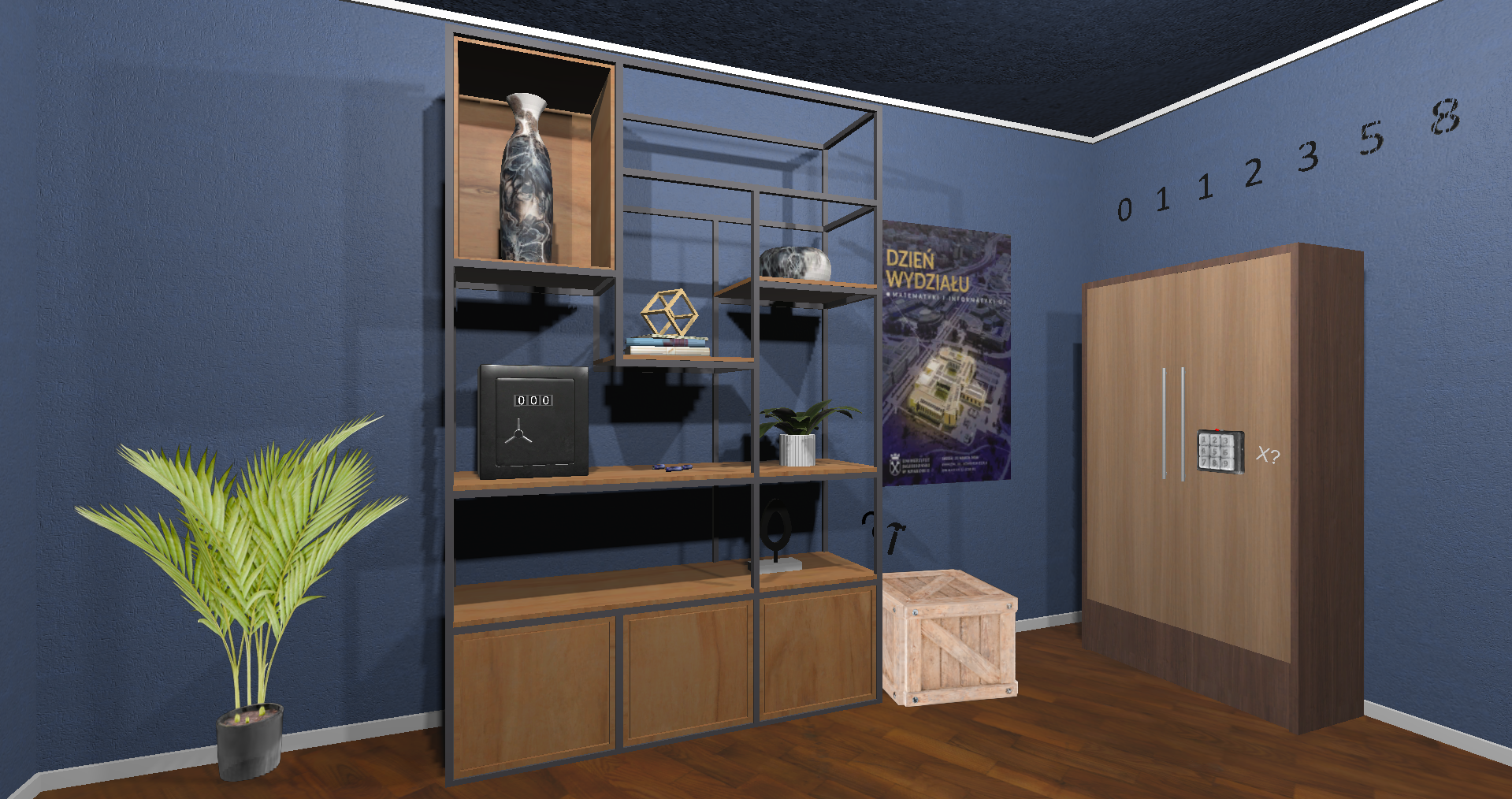
Desk with the faculty banner and a keypad puzzle Shelf with the safe puzzle and crate

Related Posts

Student Project at Jagiellonian University

Join the Student Project at Jagiellonian University The Scientific Circle of Robotics and Artificial Intelligence (NKRSI) together with Dr. hab. Przemysław Spurek and the E3DGSAR First Team invite students to take part in an exciting new project at the Faculty of Mathematics and Computer Science, Jagiellonian University (WMII UJ).

Read More

E3DGSAR at PP-RAI 2026 in Kraków

E3DGSAR at PP-RAI 2026 in Kraków From April 20 to April 22, 2026, the Faculty of Computer Science at the AGH University of Krakow hosted the 7th Polish Conference on Artificial Intelligence (PP-RAI 2026). As one of the most prominent events on artificial intelligence and machine learning in Poland, it gathered top researchers, industry experts, and students from across the country.

Read More
LumiMotion: Improving Gaussian Relighting with Scene Dynamics

LumiMotion: Improving Gaussian Relighting with Scene Dynamics

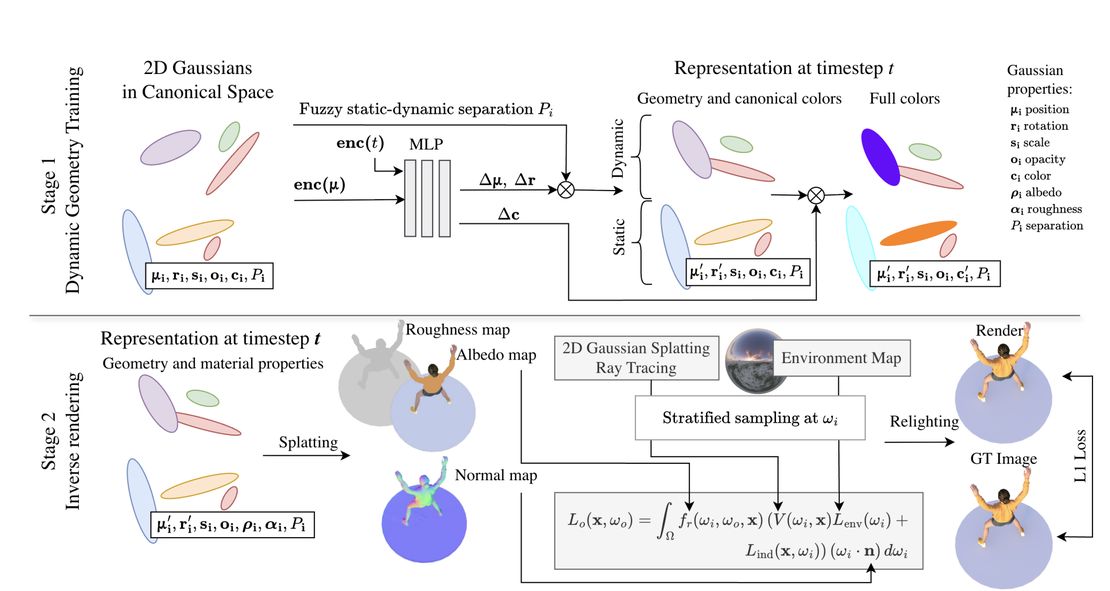
Abstract In 3D reconstruction, the problem of inverse rendering, namely recovering the illumination of the scene and the material properties, is fundamental. Existing Gaussian Splatting-based methods primarily target static scenes and often assume simplified or moderate lighting to avoid entan- gling shadows with surface appearance. This limits their ability to accurately separate lighting effects from mate- rial properties, particularly in real-world conditions. We address this limitation by leveraging dynamic elements– regions of the scene that undergo motion–as a supervisory signal for inverse rendering. Motion reveals the same sur- faces under varying lighting conditions, providing stronger cues for disentangling material and illumination. This the- sis is supported by our experimental results which show we improve LPIPS by 23% for albedo estimation and by 15% for scene relighting relative to next-best baseline. To this end, we introduce LumiMotion, the first Gaussian-based approach that leverages dynamics for inverse rendering and operates in arbitrary dynamic scenes. Our method learns a dynamic 2D Gaussian Splatting representation that em- ploys a set of novel constraints which encourage the dy- namic regions of the scene to deform, while keeping static regions stable. As we demonstrate, this separation is crucial for correct optimization of the albedo. Finally, we release a new synthetic benchmark comprising five scenes under four lighting conditions, each in both static and dynamic variants, for the first time enabling systematic evaluation of inverse rendering methods in dynamic environments and challenging lighting.

Read More